Tuesday, 15 March 2016

The more we learn about Antarctica's past, the scarier the present looks


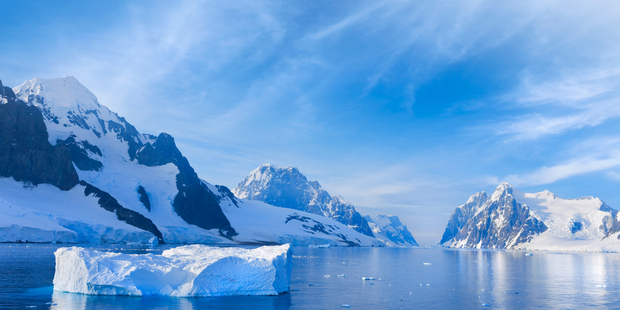
Photo / iStock 
For the second time in a month, leading scientists have closely tied the ancient history of the vast Antarctic ice sheet to a key planetary parameter that humans are now controlling - the amount of carbon dioxide in the atmosphere.

Last month, new research showed that during the Miocene era, some 14 to 23 million years ago, Antarctica gave up huge volumes of ice, equivalent to tens of meters of sea level rise, when levels of carbon dioxide in the atmosphere are thought to have been around 500 parts per million. We're at a little over 400 parts per million now.

http://www.nzherald.co.nz/world/news/article.cfm?c_id=2&objectid=11604528

Sunday, 13 March 2016

As world heats up it won't just rain, it'll pour - scientists


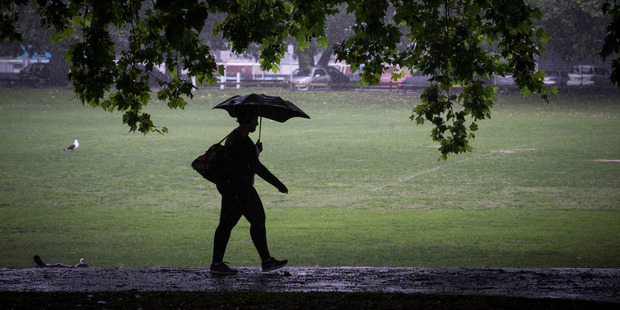
The skies are dumping more and more water on land, regardless of traditional, local climatic conditions. Photo / Greg Bowker 
As the climate heats up, the forecast is also calling for more rain. Think downpours. Cats and dogs. Or just "extreme rain", as the scientists call it.

The overall rain and snowfall average is increasing only moderately. But observations since 1951 show the wettest days every year have built up their intensity by 1 per cent to 2 per cent per decade, according to a study published this week in the journal Nature Climate Change.
 
The heavy precipitation is increasing over both wet and dry land areas, a surprising conclusion drawn from the research.

http://www.nzherald.co.nz/world/news/article.cfm?c_id=2&objectid=11602890

Friday, 11 March 2016

Tilikum, the SeaWorld killer whale at the centre of 'Blackfish', is slowly dying


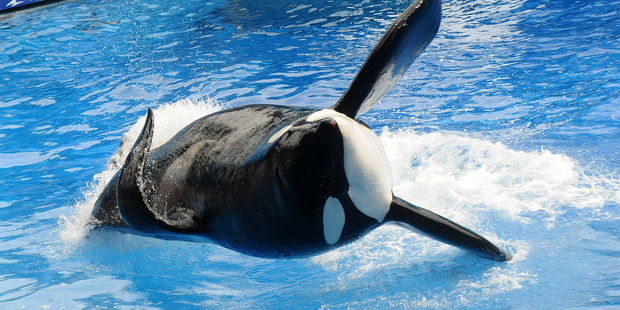
Tilikum during one his shows at Sea World in Orlando, Florida. Photo / Getty Images 
Over the last 35 years, America's most famous living killer whale has shouldered a fraught history, emerging as the symbol of both orcas' elegance and their capacity for violence. As the focus of the 2013 documentary Blackfish, Tilikum - affectionately called "Tili" - has been at once regarded as a victim of captivity and a maker of tragedy.

On Tuesday, SeaWorld Orlando announced that that knotty story may soon be coming to a slow and quiet end.

The marine park that has owned Tilikum for more than two decades said in a statement on its website that he is suffering from an illness that may likely take his life.

http://www.nzherald.co.nz/world/news/article.cfm?c_id=2&objectid=11602989

Wednesday, 9 March 2016

Global Temperatures Are On The Rise, But Media Coverage Is Not


Last year was the hottest year on record, and the impacts of climate change seem more obvious than ever. Therefore, it only makes sense that the news devotes more time to covering this critical subject.

Au contraire!

Despite the already tangible consequences of climate change, broadcast news programs gave five percent less airtime to climate change in 2015 than in 2014. A Media Matters study breaks down each network’s coverage, and the results are not encouraging.

Monday, 7 March 2016

Millions of Acres Will Stay Protected for Polar Bears in Alaska


Conservationists are celebrating a huge victory for polar bears this week after a federal appeals court upheld a designation of more than 120 million acres as critical habitat for them in Alaska.
 
Polar bears were first listed under the Endangered Species Act (ESA) as threatened in 2008, marking the first time a marine mammal gained protection because of the likelihood climate change will bring about their extinction.

Two years later, the U.S. Fish and Wildlife Service (FWS) moved to designate 187,000 square miles as critical habitat, which includes barrier islands along Alaska’s coast, denning areas on land and offshore sea-ice.

http://www.care2.com/causes/victory-millions-of-acres-will-stay-protected-for-polar-bears-in-alaska.html

Saturday, 5 March 2016

Rare blue whale footage captured in New Zealand


Rare footage has been captured of a blue whale nursing its calf in New Zealand waters.

The National Geographic has released the video, recorded by a group of researchers working in the South Taranaki Bight early last month.

The mammals were sighted by staff researching pygmy blue whales in the region.

http://www.nzherald.co.nz/nz/news/article.cfm?c_id=1&objectid=11600235

Thursday, 3 March 2016

There Will Be No Fin Whaling in Iceland This Summer!


Wonderful news!
http://www.care2.com/causes/victory-there-will-be-no-fin-whaling-in-iceland-this-summer.