Thursday, 17 November 2016

Set for another year of record heat


This year is on track to be the hottest on record, the United Nations forecast yesterday.

Scientists, meanwhile, reported that greenhouse-gas emissions from burning fossil fuels, the main driver of global warming, remained constant for the third year running last year, while the World Bank calculated that 26 million people slip into poverty annually due to natural disasters, reflecting the risks posed by climate change.

All three reports were issued on the sidelines of high-level United Nations climate talks in Marrakesh still reeling from news that Donald Trump, who denies climate change, had captured the White House.

The fact that economic growth and CO2 pollution no longer move in lock-step is an encouraging sign, the scientists said.

http://www.nzherald.co.nz/world/news/article.cfm?c_id=2&objectid=11748712

Tuesday, 15 November 2016

Climate warning despite carbon emissions levelling off


Carbon emissions from burning fossil fuels have been nearly flat for three years in a row - a "great help" but not enough to stave off dangerous global warming, a report said yesterday.

Emissions of planet-warming carbon dioxide stayed level last year at 36.3 billion tonnes (GtCO2) and were projected to rise "only slightly", by 0.2 per cent this year, according to the annual Global Carbon Budget report compiled by teams of scientists from around the world.

"This third year of almost no growth in emissions is unprecedented at a time of strong economic growth," said research leader Corinne Le Quere of the University of East Anglia.

Driven largely by reduced coal use in China, this was a "clear and unprecedented break" with the preceding decade's fast emissions growth, at a rate of some 2.3 per cent per year from 2004 to 2013, before dipping to 0.7 per cent in 2014.

"This is a great help for tackling climate change but it is not enough," said Le Quere.
For the world's nations to make true on the global pact to limit average global warming to 2C over pre-Industrial Revolution levels, emissions must do more than level off, the study found.
A decrease of 0.9 per cent per year was needed to 2030.

The concentration of greenhouse gases in the atmosphere has continued to grow, the report warned, hitting a record level of 23 GtCO2 last year that looked set to reach 25 GtCO2 in 2016.

Sunday, 13 November 2016

Extreme weather linked to man-made global warming


Many of the deadly heatwaves and hurricanes, droughts and floods this decade have borne the imprint of man-made global warming, said a series of reports yesterday that warned of worse to come.

United Nations envoys yesterday gathered in Morocco for a second day of talks on putting the Paris Agreement into action.

According to the World Meteorological Organisation (WMO), the half-decade from 2011 to 2015 was the warmest five-year stretch on record, with 2014 and 2015 the hottest of all.

In a report issued on the sidelines of the Marrakesh gathering, it warned of "the increasingly visible human footprint on extreme weather and climate events with dangerous and costly impacts". Climate change "has increased the risks of extreme events such as heatwaves, drought, record rainfall and damaging floods", WMO secretary general Petteri Taalas said.

In a separate report, risk analysts Germanwatch said more than half-a-million people worldwide died as a result of almost 11,000 extreme weather events from 1996 to 2015.

These caused damage upwards of US$3 trillion ($3.07t).
Four of the 10 countries hardest hit by extreme weather events last year were in Africa, said Germanwatch.

Poor countries, which contributed least to the planet-warming greenhouse gases in Earth's atmosphere, were least prepared to deal with the fallout - superstorms, extreme drought, heatwaves and flooding.

The Paris Agreement, the world's first universal climate pact, vows to cap global warming to under 2C over pre-Industrial Revolution levels, while aiming for 1.5 C.

http://www.nzherald.co.nz/climate-change/news/article.cfm?c_id=26&objectid=11745331

Friday, 11 November 2016

Record hot year may be new normal by 2025


The hottest year on record globally in 2015 could be an average year by 2025 and beyond if carbon emissions continue to rise at the same rate, new research has found.

An Australian study published today in the Bulletin of the American Meteorological Society indicated that human activities had already locked in this new normal for future temperatures - but immediate climate action could prevent record extreme seasons year after year.

Its lead author, Dr Sophie Lewis of the Australian National University, said if the world continued with business-as-usual emissions, extreme seasons would inevitably be the norm within decades and Australia was the "canary in the coal mine" that would experience the change first.

"This research tells us we can potentially prevent record-breaking season
"If we don't reduce our rate of emissions the record hot summer of 2013 in Australia - when we saw temperatures approaching 50 degrees Celsius in some areas - could be just another average summer season by 2035," she said

The idea of a "new normal" had been used repeatedly when talking about climate change but had never been clearly defined until Lewis and colleagues developed a scientific definition for the term.
"Based on a specific starting point, we determined a new normal occurred when at least half of the years following an extreme year were cooler and half warmer," she said.

"Only then can a new normal state be declared."

http://www.nzherald.co.nz/climate-change/news/article.cfm?c_id=26&objectid=11743550

Monday, 7 November 2016

The scientific study that found a direct link between carbon dioxide and shrinking Arctic ice


Drive your car 4000km and its greenhouse gas emissions will melt three square metres of ice on the Arctic Ocean, according to a study that has found a direct link between carbon dioxide and shrinking ice.

Examining long-term trends for ice floating on the ocean since the 1950s, scientists in Germany and the United States projected the ocean around the North Pole would be ice-free in summers by the mid-2040s at current levels of emissions.

In the historical records, they found that every tonne of carbon dioxide emitted to the atmosphere meant on average the loss of three square metres of ice in September, when the ice reaches a minimum extent before expanding in winter.

That made it possible to "grasp the contribution of personal carbon dioxide emissions to the loss of Arctic sea ice," scientists at Germany's Max Planck Institute for Meteorology and the US National Snow and Ice Data Center wrote in the journal Science.


Each passenger taking a return flight from New York to Europe, or driving a car 4000km, would emit about a tonne of carbon dioxide, they estimated.

A long-term retreat of Arctic sea ice is already causing profound changes, disrupting the lives of indigenous peoples while opening the region to more oil and gas exploration and shipping.

Scientists usually deal in more abstract terms such as billions of tonnes of greenhouse gases.

http://www.nzherald.co.nz/world/news/article.cfm?c_id=2&objectid=11742459

Saturday, 5 November 2016

United Nations warning ahead of climate talks


The world's nations must urgently ramp up commitments to cut planet-warming carbon emissions to avoid "human tragedy", the United Nations warned yesterday.

As they stand, these commitments - which do not kick in until 2020 - would still allow average global temperatures to climb as high as 3.4C by the end of the century, a recipe for massive climate damage, the UN Environment Programme (UNEP) said in its annual Emissions Gap report.

"If we don't start taking additional action now, beginning with the upcoming climate meeting in Marrakesh, we will grieve over the avoidable human tragedy," said UNEP head Erik Solheim.

http://www.nzherald.co.nz/environment/news/article.cfm?c_id=39&objectid=11742522

Thursday, 3 November 2016

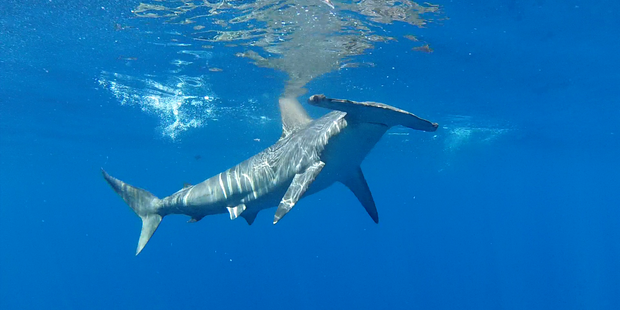
How did Sophie the shark elude scientists?


Scientists who sought to solve mysteries about hammerhead sharks were only left with another when one of the first adults ever tagged ended up eluding them.
 
Last week, eight months after the smooth hammerhead shark was caught and tagged in the Hauraki Gulf, the electronic pop-up tag started transmitting data back via satellite.

But they soon discovered the 3.2m shark, named Sophie, had long since shed the device.
Sophie was hooked at Simpsons Rock, near the Mokohinau Islands, by long-time research collaborators and Auckland fishers Scott and Sue Tindale.

Finding an adult smooth hammerhead shark had been a coup; while previous studies had successfully tracked juveniles, only one other adult in the species had ever been tagged with an electronic tag, and was thought to have died soon after.

"They're hard to find, they're hard to tag and they're quite susceptible to stress and handling," National Institute of Water and Atmosphere (Niwa) marine scientist Dr Malcolm Francis said.
"Elsewhere in the world, it's been found that hammerheads die a lot more easily after capture than a lot of other sharks do."

The scientists had been optimistic about Sophie, which proved a challenge to tag and appeared to be healthy and lively when released.

For Francis - whose Government-funded research has led to stunning new insights into the behaviour and range of hammerhead, mako and great white sharks - the tag presented the first real opportunity to learn where adult smooth hammerhead sharks travel over a year, and why.

http://www.nzherald.co.nz/environment/news/article.cfm?c_id=39&objectid=11740689