Saturday, 1 October 2016

NZ sea lion a cold-blooded killer


Researchers have mapped out the homicidal histories of more than 1000 mammals - and found that the New Zealand sea lion was among the most conspicuous.

In a long list compiled by an international team of scientists, who just reported their findings in the major journal Nature, the critically-endangered seal species stood out alongside the lion, long-tailed marmot, banded mongoose and red-fronted lemur as having the highest rates of so-called "conspecific deaths".

But, of course, the bigger story was us humans, who, unlike bats and whales, don't exactly have a clean record.

The study authors found that "lethal interpersonal violence" was a particular feature of primates and was likely to have been inherited by humans during the course of evolution.

Taking data from a variety of human and mammalian sources, ranging from 50,000 years ago to the present, they predicted that the overall proportion of human deaths caused by interpersonal violence 

tands at around two per cent - a figure that matched the observed value for prehistoric man.

http://www.nzherald.co.nz/environment/news/article.cfm?c_id=39&objectid=11719521

Thursday, 29 September 2016

Cranberries at 200: Market changes, drought create a crisis


All is not well in cranberry country this harvesting season, the 200th anniversary of the world's first known commercial cultivation.

A recent task force report found many Massachusetts growers whose families have tended bogs for generations were in "dire straits," facing challenges that include rising production costs, decreasing crop values, changing consumer habits and increasing competition from other U.S. states and Canada.
Adding to the problems is a severe drought that threatens to leave farms without enough water to flood their bogs.

http://www.nzherald.co.nz/world/news/article.cfm?c_id=2&objectid=11717909

Wednesday, 28 September 2016

NZ air among world's cleanest, safest - report


New Zealand has some of the cleanest and safest air on the planet, a new World Health Organisation report suggests.

The report analysed data from more than 100 nations, comparing exposure to ambient air pollution and related death and illness.

It showed New Zealand was either in the top five or 10 nations with the best results for concentrations of PM2.5 - a key measure of air pollution - along with rates of deaths, disease and illness that could be attributed to pollution.

However, Associate Professor Simon Hales of Otago University's Department of Public Health questioned whether the report's methods accurately reflected rates in smaller countries such as New Zealand.

"Their estimates of PM2.5 exposure use data from satellites, which are excellent for large countries with little surface air pollution monitoring data, but do not perform so well at local scale in small countries like New Zealand," Hales said.

The resolution of their data is of the order of 10km, which was too coarse for most New Zealand urban areas, he said.

"The study authors did not assess health impacts of exposures below 5.9 μg/m3.'
"Again, this makes sense if exposures are high, as in countries with a lot of heavy industry or using biomass for heating and cooking.

"It is not so appropriate for New Zealand, since we know from epidemiological studies of mortality that the comparatively low levels of exposure do have a substantial health impact here.

http://www.nzherald.co.nz/environment/news/article.cfm?c_id=39&objectid=11717858

Friday, 23 September 2016

Study says ice loss understimated


Rapidly melting Greenland may be shedding its ice even faster than anyone suspected, new research suggests.

A study just out in the journal Science Advances finds that previous studies may have underestimated the current rate of mass loss on the Greenland ice sheet by about 18 billion tonnes per year.
Generally, scientists estimate ice loss in Greenland (and elsewhere around the world) using data from satellites. But the new study suggests these satellite studies may have included some incorrect assumptions, causing them to miscalculate the amount of mass actually disappearing from the ice sheet each year.

The assertion revolves around a concept known as "glacial isostatic adjustment", or the tendency of land to bounce back after a large weight of ice has been removed from it. Over the past 25,000 years, since the last great Ice Age, the planet's surface has been slowly springing back into place.

An important part of this effect is driven by the flowing of the Earth's mantle, a layer of thick, oozing rock beneath the Earth's crust, said Michael Bevis, a geophysicist at the Ohio State University and a co-author on the new study. When a heavy weight, such as a huge ice sheet, forms on the Earth's surface, the resulting high pressure causes the rocky mantle to begin flowing out from underneath it. When the weight is removed, the mantle gradually begins to flow back into place.

http://www.nzherald.co.nz/environment/news/article.cfm?c_id=39&objectid=11715085

Wednesday, 21 September 2016

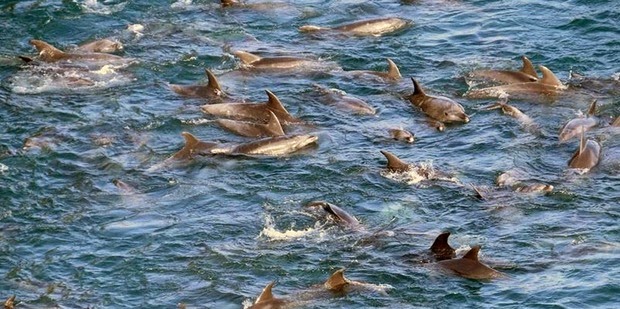
Dolphins Recorded Chatting With Each Other Like Humans

,
 
Maybe we should  say, humans chatting like dolphins as they have been on this Earth three times longer than humans!
 
http://www.care2.com/causes/dolphins-recorded-chatting-with-each-other-like-humans.html

Friday, 16 September 2016

How will climate change hurt our species?


In New Zealand, climate change is particularly important as there are many rare and unique plants and animals, some of which are already under threat from invasive pests and habitat loss.

Using sophisticated mathematical models, scientists can forecast outcomes, but these models are only as good as the available data, say scientists in a new study published in the journal Science today.

  http://www.nzherald.co.nz/climate-change/news/article.cfm?c_id=26&objectid=11706198

Tuesday, 13 September 2016

World 'completely unprepared for' the impacts of warming seas


The warming of the world's oceans is spreading dangerous diseases and affecting fish stocks and crop yields, a major new report has said.

Conservationists warned the world is "completely unprepared for" the impacts of warming oceans on wildlife, natural systems and humans, some of which are already being felt.

Even with action to significantly reduce the greenhouse gas emissions which are causing ocean warming, there will still be a high risk of impacts, according to the report launched by the International Union for Conservation of Nature (IUCN).

IUCN director general Inger Andersen said: "Ocean warming is one of this generation's greatest hidden challenges - and one for which we are completely unprepared.

"The only way to preserve the rich diversity of marine life, and to safeguard the protection and resources the ocean provides us with, is to cut greenhouse gas emissions rapidly and substantially."
As part of the report, findings from University of Plymouth professors Camille Parmesan and Martin Attrill show that marine-related tropical diseases and harmful algal blooms are spreading to colder regions for the first time.

Outbreaks of Vibrio vulnificus, a relation of the bacteria causing cholera and which causes death in between 30 per cent and 48 per cent of cases, have been newly diagnosed further north than previously recorded.

The disease has previously been a problem in warm waters such as the Gulf of Mexico where mostly it has been contracted by eating infected oysters, but cases have recently occurred in the Baltic and Alaska, the report warns.


Warming sea surface temperatures in fishing grounds can also cause toxins from algal blooms to enter the food chain.

http://www.nzherald.co.nz/world/news/article.cfm?c_id=2&objectid=11704816